
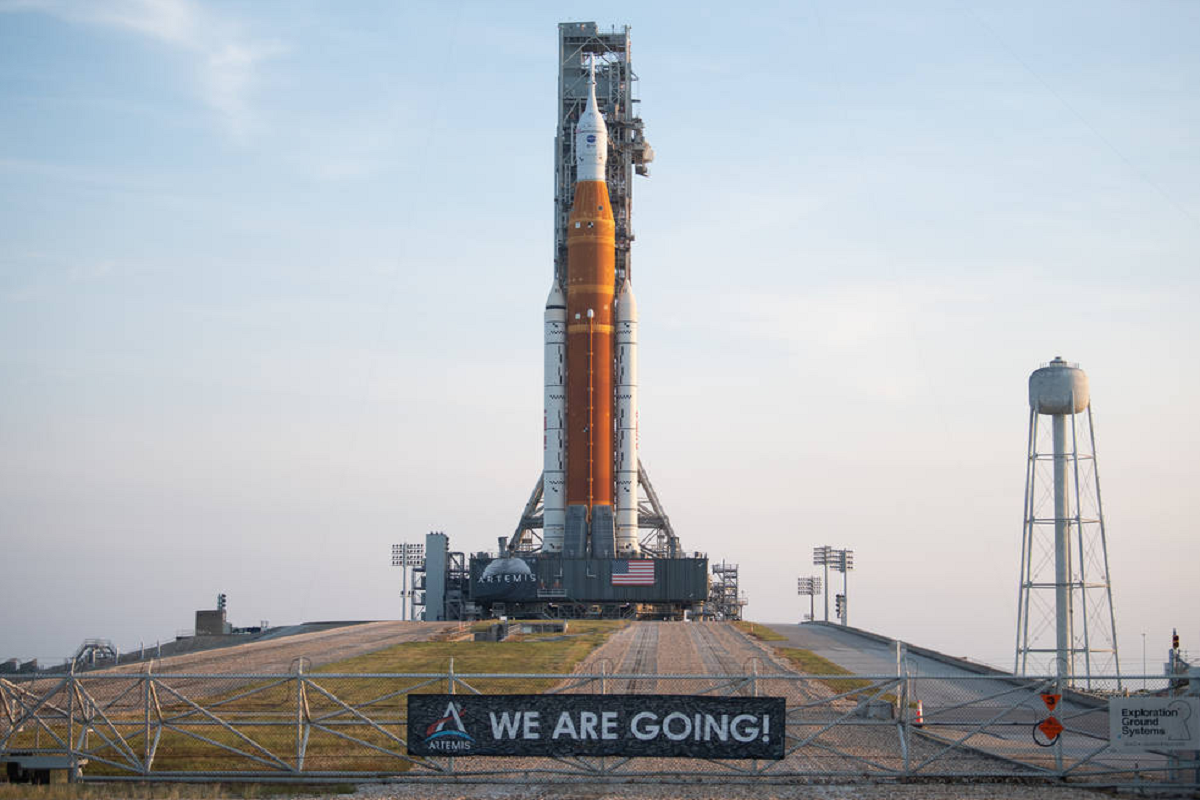
Artemis: NASA’s Return to the Moon
NASA’s Artemis program is a long-term human spaceflight initiative designed to return astronauts to the Moon, develop sustainable lunar exploration capabilities, and establish a foundation for future missions to Mars.
The program’s first major flight was Artemis I, launched from NASA’s Kennedy Space Center in Florida on November 16, 2022. The uncrewed mission tested NASA’s Space Launch System (SLS) rocket and Orion spacecraft under deep-space conditions. Orion traveled around the Moon and returned to Earth after a 25.5-day mission, splashing down in the Pacific Ocean off the coast of San Diego on December 11, 2022. The mission successfully demonstrated critical systems required for future crewed lunar missions.
Artemis represents NASA’s first major human-lunar exploration program since Apollo 17, which became the last crewed lunar landing in December 1972. More than five decades later, Artemis is intended to move lunar exploration from short-duration expeditions toward a more sustained human presence.
The Artemis Missions
Artemis I — 2022:
An uncrewed test flight of the SLS rocket and Orion spacecraft. Its primary purpose was to validate launch, deep-space navigation, communications, life-support systems, thermal protection, and Earth reentry.
Artemis II — Crewed Lunar Flyby:
Artemis II is designed to carry astronauts around the Moon and return them safely to Earth. It will be the first crewed mission to travel beyond low Earth orbit since Apollo 17 and will provide an important test of Orion’s crewed deep-space systems.
Artemis III — Lunar Landing:
Artemis III is planned to return astronauts to the lunar surface. NASA’s current architecture emphasizes the lunar south polar region, an area of particular scientific and strategic interest because permanently shadowed craters may contain water ice. Lunar resources could eventually support life-support systems, science operations, and future exploration.
Why Artemis Matters
Artemis is more than a return to the Moon. It is an effort to develop the transportation, communications, navigation, robotics, surface systems, and operational experience required for sustained activity beyond Earth.
The program also represents a major transition from the Apollo model of short-duration lunar expeditions toward a broader lunar exploration architecture involving NASA, international partners, and commercial companies.
One historical detail is often overlooked: Cape Canaveral’s Launch Operations Center was renamed the John F. Kennedy Space Center in 1963, following President Kennedy’s assassination. Today, Kennedy Space Center remains one of the primary U.S. facilities for human spaceflight and deep-space launch operations.
For students studying space defense, aerospace engineering, science, and the emerging space economy, Artemis provides a useful case study in how government space programs, commercial aerospace companies, international partnerships, advanced robotics, and lunar infrastructure are converging to shape the next era of space exploration
Recent Posts
new Space Economy
Sean Kirkpatrick of AARO Retires after completing Department Investigations
The All-Domain Anomaly Resolution Office (AARO) Director Sean Kirkpatrick, Retires