

AARO, UAP Investigations, and the Changing Science of Anomalous Observations
The All-domain Anomaly Resolution Office (AARO) was established within the U.S. Department of Defense to investigate and analyze unidentified anomalous phenomena across the air, land, sea, space, and electromagnetic domains. Working with military organizations and federal agencies, AARO’s mission includes detecting, characterizing, identifying, and resolving objects or events observed near military installations, training ranges, operational areas, restricted airspace, and other locations of national-security interest.
From UFO Terminology to UAP Analysis
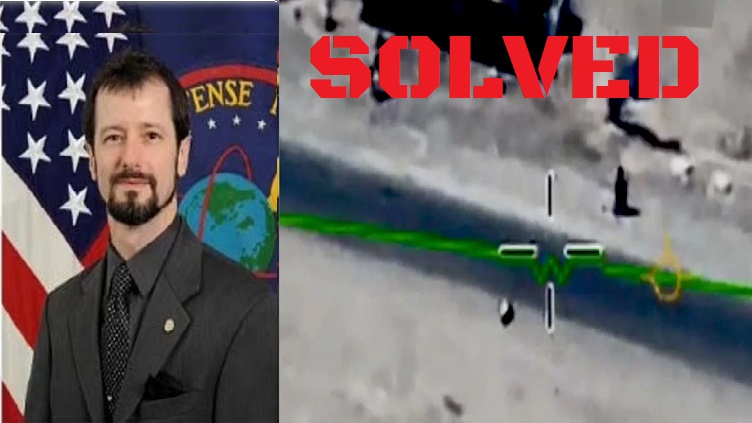
Under former AARO Director Sean Kirkpatrick, the Pentagon’s approach to unidentified phenomena shifted toward a more technical and data-driven framework. The terminology also evolved. Although Unidentified Aerial Phenomena (UAP) had been used by government organizations before Kirkpatrick’s tenure, the term became substantially more prominent in public and congressional discussions during this period.
Kirkpatrick emphasized that the central problem was not proving or disproving extraterrestrial life. Instead, the fundamental intelligence question was determining what was being observed, how it was being detected, and whether the observation represented a foreign intelligence, surveillance, and reconnaissance capability, a conventional aircraft or sensor artifact, an atmospheric phenomenon, or something that remained unresolved because of insufficient data.
This distinction is important for students studying aerospace engineering, intelligence, cybersecurity, and national security. An unexplained observation is not automatically evidence of an extraordinary technology. In technical analysis, an anomaly represents a condition requiring additional data and investigation.
The “Orb,” “Tic Tac,” “Gimbal,” and “Go Fast” Cases
Several highly publicized UAP cases—including the so-called “Tic Tac,” “Gimbal,” and “Go Fast” incidents—became central to the public debate surrounding UAP investigations. These cases demonstrate the difficulty of interpreting observations when investigators do not have complete information about sensor characteristics, environmental conditions, viewing geometry, or the capabilities of the observed object.
The same principle applies to reports sometimes described as “orbs.” A visual observation can be compelling while still being scientifically inconclusive. Determining the object’s identity requires correlating multiple data sources, including electro-optical imagery, infrared sensors, radar tracks, telemetry, atmospheric conditions, flight data, and the position and characteristics of the observing platform.
The 2023 Chinese high-altitude balloon incident further demonstrated why unidentified objects can become a national-security issue. Once an object is detected, the challenge is determining its origin, capabilities, purpose, and potential threat.
The Importance of Data and Citizen Science
The UAP debate has also produced a growing interest in citizen science. Researchers outside government agencies have applied image analysis, astronomy, atmospheric science, triangulation, and open-source intelligence techniques to investigate unusual observations.
Recent analyses of alleged “orb” sightings illustrate how independent researchers can contribute to the resolution of anomalous observations. However, citizen-science conclusions should be evaluated using the same standards applied to government investigations: reproducible methodology, reliable source data, appropriate uncertainty analysis, and independent verification.
This is particularly important because modern imaging systems can produce observations that appear extraordinary without necessarily representing extraordinary objects. Atmospheric effects, optical artifacts, parallax, compression, sensor limitations, and distance-estimation errors can significantly alter the apparent characteristics of an object.
What Happens to NASA’s UAP Research?
The continuing resolution of individual UAP cases raises an important question about the role of organizations such as NASA in studying anomalous observations. NASA’s approach has emphasized scientific methodology, data quality, and the development of better observation systems rather than treating UAP reports as evidence of extraterrestrial activity.
Even when a particular observation is eventually identified, the scientific value of investigating it remains. The process can reveal weaknesses in sensor systems, gaps in observational data, atmospheric effects, or shortcomings in existing analytical methods.
UAP and the Space Domain
One of the most important questions concerns observations beyond the atmosphere. With thousands of satellites and other spacecraft operating in Low Earth Orbit (LEO), space has become an increasingly crowded operational environment.
Satellite operators, military organizations, astronomers, and commercial companies continuously track objects in orbit. The development of Space Domain Awareness (SDA) and Space Domain Awareness/Space Situational Awareness (SSA) capabilities has made the identification and tracking of orbital objects increasingly sophisticated.
This creates an important distinction between an unexplained observation in Earth’s atmosphere and an unidentified object in orbit. Orbital mechanics provide investigators with additional information, including trajectory, velocity, orbital period, altitude, and changes in orbital parameters.
A Continuing Scientific and National-Security Challenge
Kirkpatrick announced his departure as AARO director in November 2023, with Deputy Director Timothy Phillips serving in an interim leadership role. His tenure helped establish AARO as a major government organization for addressing unidentified-anomaly reports and brought unprecedented public attention to the subject.
The larger lesson for students is that the UAP issue sits at the intersection of aerospace engineering, intelligence analysis, sensor technology, astronomy, artificial intelligence, cybersecurity, and national security.
The objective of a serious UAP investigation is not to automatically confirm or dismiss extraordinary claims. It is to transform an unexplained observation into a scientifically and operationally useful conclusion.
In an increasingly sensor-rich world, the ability to distinguish between an unknown object, an unknown technology, a sensor artifact, a natural phenomenon, and a genuine security threat will become an increasingly important technical capability.
For the next generation of aerospace and defense professionals, the real challenge is not simply asking, “What is it?” It is determining what the available data can actually prove.