
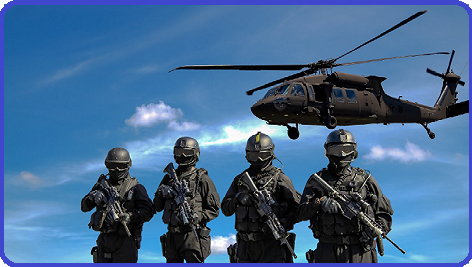

What is cyberwarfare
Cyberwarfare Cyber Warfare is currently Hacking, Espionage, Sabotage, and or Harassment Attacks on military and civilian computer networks and personnel. Some military’s focus is on large country-on-country attacks on Infrastructure, military, or industrial targets.
From Mechanical Computation to Cyber Warfare: The Evolution of Computing and Military Technology
The history of computing is closely connected to the development of modern science, engineering, military operations, and national security. Although Charles Babbage’s conceptual Analytical Engine dates to the 1820s, computers did not become broadly useful information-processing systems until much later. The early applications were primarily academic, mathematical, scientific, and engineering-oriented, establishing the computational foundation for modern information technology.
World War I: 1914–1918 — Computation and Information Warfare
During World War I, computing technology remained largely mechanical and analog. These systems had limited military utility compared with later digital systems. Instead, military advantage increasingly came from signals intelligence, communications, cryptography, psychological operations (PSYOP), deception, and propaganda.
The conflict demonstrated an important principle that remains relevant today: technological warfare is not limited to weapons platforms. Information, communications, intelligence, and influence operations can directly affect military decision-making and strategic outcomes.
The 1930s — The Rise of Analog Computing
During the 1930s, engineers developed increasingly sophisticated analog computing machines designed to solve mathematical problems. These systems used physical mechanisms—including gears, shafts, electrical circuits, and other components—to represent mathematical relationships.
Analog computers became particularly valuable for applications such as ballistics, navigation, fire-control calculations, engineering analysis, and scientific research. Their development established an important transition from manual calculation toward automated computational processing.
World War II: 1939–1945 — The Transition to Digital Computing
World War II accelerated computing research dramatically. Military organizations required faster methods for ballistic calculations, cryptanalysis, weapons development, logistics, radar, and scientific modeling.
By the 1940s, electronic digital computing was emerging. One of the most significant milestones was ENIAC—the Electronic Numerical Integrator and Computer, developed in the United States and completed in 1945. ENIAC demonstrated the potential of electronic digital computation at a scale far beyond mechanical calculating machines.
The Manhattan Project, initiated in 1942, also demonstrated the strategic importance of high-speed scientific computation. Physicists and engineers performed enormous numbers of calculations associated with nuclear physics, neutron behavior, hydrodynamics, and weapons design. The resulting research led to the first nuclear weapons and their use against Hiroshima and Nagasaki in August 1945.
The Cold War: 1947–1989 — Computing Becomes a Strategic Capability
The end of World War II did not end military competition. It initiated the Cold War, accompanied by a nuclear arms race and rapid development of military technology.
The Soviet Union conducted its first nuclear weapons test in 1949. The United Kingdom followed in 1952, while the United States had already conducted its first nuclear test in 1945 and subsequently developed and tested thermonuclear weapons. France and China later entered the nuclear weapons era, with China conducting its first nuclear test in 1964.
Computing became increasingly important to this strategic competition. Governments invested in early-warning systems, missile guidance, radar networks, nuclear command and control, cryptography, signals intelligence, electronic warfare, and aerospace systems.
Korea and Vietnam — The Expansion of Electronic and Information Warfare
During the Korean War (1950–1953) and Vietnam War (1955–1975), the United States expanded its use of psychological operations, electronic warfare, communications intelligence, signals intelligence, radar, navigation systems, and increasingly sophisticated command-and-control technologies.
Military aircraft and strategic weapons systems were becoming computational platforms. However, their computing capabilities were extremely limited by modern standards. Systems used in strategic bombers, spacecraft, missiles, and other military platforms often operated with memory measured in kilobytes rather than gigabytes or terabytes.
NASA faced similar engineering constraints. Spacecraft computers had to perform complex navigation, guidance, telemetry, and control functions while operating with extremely limited processing power, memory, electrical power, and physical mass.
From Computing to Cyber Warfare
By the latter decades of the 20th century, computing had evolved from specialized mechanical and electronic calculators into interconnected digital information systems. This transformation fundamentally changed the military threat environment.
Cybersecurity became concerned not only with protecting individual computers but also with protecting networks, databases, command-and-control systems, communications infrastructure, weapons platforms, satellites, industrial control systems, and critical infrastructure.
The major security concerns increasingly included:
- Cyber espionage — unauthorized acquisition of information.
- Cyber sabotage — deliberate disruption or destruction of digital systems.
- Cyberattacks — attempts to compromise the confidentiality, integrity, or availability of information systems.
- Electronic warfare — deliberate manipulation or disruption of electromagnetic communications and sensing systems.
- Information warfare — operations designed to influence information, decision-making, or public perception.
- Stand-alone system security — protecting systems that are isolated or disconnected from conventional networks.
- Command-and-control security — protecting systems responsible for military decision-making and operational coordination.
These developments established the foundation for modern cyber warfare and space-based cybersecurity, where digital systems, communications networks, satellites, sensors, and artificial intelligence increasingly operate as interconnected components of national security infrastructure.
1822–2022: Two Centuries of Computing
The year 2022 marked approximately 200 years since Charles Babbage’s early mechanical computing concepts of the 1820s. Over those two centuries, computation evolved from mechanical gears and mathematical tables into electronic digital computers, global networks, spacecraft computers, artificial intelligence, autonomous systems, and cyber-physical infrastructure.
The historical progression is significant:
Mechanical computation → Analog computing → Electronic digital computing → Networked computing → Cyber warfare → AI-enabled systems
Understanding this evolution is essential for analyzing modern national security. Today’s military advantage increasingly depends not simply on the number of weapons a nation possesses, but on its ability to collect data, process information, protect networks, maintain communications, control electromagnetic spectrum access, secure satellites, and make decisions faster than an adversary.
Computing has therefore evolved from a tool for performing calculations into a strategic component of military power and national security.
Computers, Cyber Operations, and the Incident Commander
A 200-Year Evolution of Computing, Intelligence, and Political Cyber Conflict
Introduction
For an incident commander, the history of computing is not simply a history of machines. It is a history of information processing, intelligence collection, communications, decision support, cyber operations, and information warfare.
In 2022, it was appropriate to mark approximately 200 years since Charles Babbage presented his concept for the Difference Engine. Babbage’s 1822 design represented an important transition from human calculation to automated computation. The Difference Engine was designed to calculate and automatically produce mathematical tables, while his later Analytical Engine incorporated concepts resembling memory, processing, programmed instructions, and input/output.
For today’s incident commander, the important lesson is that computing technology changes the speed, scale, and consequences of decision-making. Modern incidents can involve physical hazards and cyber incidents simultaneously. A power outage, transportation failure, emergency communications disruption, ransomware event, disinformation campaign, or military conflict may have both physical and digital components.
A 200-Year Computing and Intelligence Timeline
1822 — Charles Babbage’s Difference Engine
Charles Babbage presented his Difference Engine concept in 1822. It was designed to automate mathematical calculations and reduce errors in manually produced numerical tables.
Incident-command relevance:
The fundamental concept was automation: transferring repetitive analytical work from humans to machines. Modern incident-management systems continue this progression through automated data collection, processing, visualization, alerting, and decision support.
1930s — Radar
The development of practical radar systems transformed air defense and early warning. Radar demonstrated how electronic sensors could continuously collect information about an operational environment.
Incident-command relevance:
Modern command centers depend on sensors, telemetry, cameras, weather systems, aircraft tracking, satellite data, and other sources to create situational awareness.
1941 — Pearl Harbor and Intelligence Failure
The Japanese attack on Pearl Harbor demonstrated that possessing information is not equivalent to correctly interpreting and acting upon it.
Incident-command lesson:
Information must be collected, correlated, evaluated, communicated, and acted upon. Intelligence failures can occur at any stage of this process.
1947 — Creation of the CIA
The Central Intelligence Agency was established as part of the post-World War II reorganization of the U.S. national-security system.
The development of centralized intelligence organizations reflected the increasing importance of systematic collection and analysis.
1957 — Sputnik
The Soviet launch of Sputnik demonstrated that rocket technology, communications, computing, intelligence, and national security were becoming increasingly interconnected.
Incident-command lesson:
A technological event can have consequences far beyond the immediate physical event.
1958 — NASA
NASA was established in 1958, consolidating U.S. civilian space activities and accelerating the development of aerospace, communications, computers, navigation, and remote sensing.
1960 — U-2 and High-Altitude Intelligence
The U-2 reconnaissance aircraft demonstrated the importance of persistent intelligence collection from high altitude.
Modern equivalent:
Today’s intelligence architecture combines aircraft, satellites, unmanned systems, signals intelligence, cyber intelligence, and other sensors.
1960s — Supercomputing
Supercomputers expanded the ability to perform complex calculations involving weather, nuclear physics, aerospace engineering, intelligence analysis, and military applications.
The critical change was scale: computers could process information at speeds and volumes impossible for human teams alone.
1962 — Cuban Missile Crisis
The Cuban Missile Crisis demonstrated the importance of intelligence, communications, analysis, political decision-making, and crisis management.
Incident-command lesson:
During a crisis, decision-makers must distinguish between:
- Confirmed information
- Probable information
- Unverified reporting
- Deception
- Assumptions
- Missing information
That distinction remains fundamental to modern incident command.
1969 — ARPANET
ARPANET established an important foundation for modern packet-switched networking and eventually the Internet.
The networking revolution transformed computers from isolated calculating machines into interconnected information systems.
Incident-command consequence:
A networked system can improve coordination while simultaneously creating new dependencies and attack surfaces.
From Computer Security to Cyber Conflict
1987 — The Jerusalem/“Stoned” Virus Era
The late 1980s demonstrated that malicious software could spread between computers and disrupt normal operations. The Stoned virus, first identified in 1987, became one of the better-known early computer viruses.
Incident-command lesson:
A digital incident can propagate from one system to another without a conventional physical pathway.
1994 — Aldrich Ames
The Aldrich Ames espionage case demonstrated that intelligence systems face threats from both external penetration and trusted insiders.
Incident-command lesson:
Security is not simply a perimeter problem. Organizations must consider:
- Insider threats
- Credential compromise
- Privileged access
- Human behavior
- Data exfiltration
- Supply-chain vulnerabilities
1997 — Stealth Technology
The operational maturity of stealth aircraft illustrated the convergence of materials science, radar engineering, computer modeling, electronic warfare, and systems engineering.
The larger lesson is that modern military capability increasingly comes from integrated systems rather than individual technologies.
1999–2000 — Y2K
Y2K became one of the world’s largest coordinated information-technology risk-management exercises.
Organizations examined legacy systems, identified dependencies, tested remediation, developed contingency plans, and prepared for potential failures.
Incident-command lesson:
Preparedness frequently determines whether a technological failure becomes a minor incident or a major crisis.
2001 and the Expansion of Information Warfare
September 11, 2001 — Intelligence and Information Failure
The September 11 attacks demonstrated the consequences of fragmented information, organizational stovepipes, inadequate information sharing, and difficulty connecting individual indicators into a coherent threat picture.
For incident commanders, the lesson is particularly important:
Situational awareness depends not only on collecting information, but on connecting the information.
2007 — Estonia Cyberattacks
Estonia experienced major distributed-denial-of-service attacks against government, banking, media, and other Internet-connected services.
The attacks became an important case study in cyber conflict and national resilience. Attribution was complicated because malicious traffic could originate from compromised computers and botnets rather than directly from government-controlled systems.
Incident-command lesson:
Cyber attribution is difficult. Incident commanders should distinguish between:
- What happened
- Who was affected
- Where the malicious traffic originated
- Who controlled the infrastructure
- Who benefited from the attack
- What evidence supports attribution
The 2007 Estonia case also contributed to increased NATO attention to cyber defense.
2010 — Stuxnet
Stuxnet demonstrated that malware could be engineered to interact with industrial-control environments and cause effects beyond conventional information theft.
This was a major milestone in the evolution of cyber operations from data compromise toward operational effects.
2010 — WikiLeaks
The publication of classified and sensitive government material through WikiLeaks intensified debates concerning information security, classification, insider threats, journalists, digital publication, and the consequences of large-scale data disclosure.
2013 — Edward Snowden
The Snowden disclosures dramatically increased public awareness of government surveillance programs and the scale of modern signals and communications intelligence.
For incident commanders, the case illustrates the security implications of privileged access and sensitive information.
2014 — Sony Pictures Cyberattack
The Sony Pictures incident demonstrated that cyberattacks could combine network intrusion, data destruction, data theft, public disclosure, and coercive messaging.
The incident helped illustrate the growing convergence between cybersecurity, corporate security, public affairs, and national security.
2015 — The New Space Economy
The emergence of commercially developed launch vehicles, satellite constellations, commercial remote sensing, and private spaceflight marked a major transition in the space sector.
For incident commanders, space infrastructure is increasingly part of terrestrial critical infrastructure.
Modern emergency operations can depend upon:
- GPS/GNSS
- Satellite communications
- Weather satellites
- Earth observation
- Remote sensing
- Satellite internet
- Timing services
- Space-based intelligence
A disruption in space services can therefore become a terrestrial incident.
2016 — Election Infrastructure and Political Cyber Operations
The 2016 U.S. election demonstrated that cyber operations could target not only military and government networks but also political organizations, election infrastructure, public confidence, and democratic institutions.
The U.S. Senate Intelligence Committee reported that Russian-affiliated cyber actors targeted election infrastructure in numerous states, including scanning, attempted intrusions, and access to voter-registration systems. The Committee did not find evidence that vote tallies were manipulated or that voter-registration information was deleted or modified.
This distinction is critical for an incident commander:
Cyber intrusion does not automatically mean election results were altered.
An operation can instead seek to:
- Steal information
- Disrupt operations
- Expose confidential information
- Influence public perception
- Reduce confidence in institutions
- Create confusion
- Generate political pressure
This is commonly discussed within the broader concept of information warfare and influence operations.
has former president b Obama done something that could be een as treason in election tampering
Yes—but it is important to separate “conduct that could be investigated as election interference or other crimes” from “treason”, because legally they are very different.
If you’re referring to allegations involving Barack Obama and the 2016 election/Russia investigation, there are legitimate, documented controversies worth examining. However, based on the public record I found, there is not an established legal basis for saying Obama committed treason.
Why “treason” is a very high bar
The Constitution defines treason narrowly. Article III, Section 3 says it consists only of:
- Levying war against the United States, or
- Adhering to an enemy of the United States and giving that enemy aid and comfort.
A treason conviction also requires two witnesses to the same overt act, or a confession in open court.
Consequently, even deliberately interfering with an election would not automatically constitute treason. Depending on the evidence, it could instead potentially implicate statutes concerning election offenses, abuse of government authority, obstruction, conspiracy, false statements, or civil-rights violations.
What is actually documented regarding Obama and 2016?
One important fact sometimes gets lost in the political debate: Obama himself ordered the intelligence community review of Russian election activities on December 9, 2016. The resulting assessment concluded that Russia conducted an influence operation against the 2016 election. It also specifically said the intelligence community did not assess whether Russia’s activities actually changed the election outcome, and DHS determined that systems targeted by Russian actors were not involved in vote tallying.
The Senate Intelligence Committee subsequently characterized the Russian operation as a significant escalation in Russian interference and described cyber-espionage and covert influence operations.
At the same time, the later Durham investigation identified significant problems with aspects of the FBI’s handling of the 2016 investigation. The FBI itself acknowledged that Durham identified “missteps” and said corrective actions had been implemented.
That creates an important distinction:
Documented problems in the FBI’s investigation ≠ proof that Obama personally fabricated the investigation or tampered with the election.
Could it nevertheless be investigated?
Absolutely. If credible evidence demonstrated that a former president knowingly:
- directed federal agencies to fabricate intelligence,
- knowingly disseminated false intelligence to influence an election,
- conspired with others to manipulate an election,
- unlawfully used government resources to affect the electoral process, or
- coordinated with a foreign adversary to alter an election,
those allegations could warrant serious criminal investigation.
But “treason” would still require satisfying the constitutional definition, particularly the enemy/aid-and-comfort or levying-war requirements. The Supreme Court has historically interpreted treason narrowly, and the Constitution’s framers deliberately made it difficult to use treason as a political weapon.
If you’re asking specifically about the Obama administration’s actions surrounding the Clinton/Russia intelligence investigation from 2016–2017, I can lay out a timeline of what Obama, Brennan, Comey, Clapper, Lynch and the FBI actually did, what Durham found, and which actions could potentially constitute crimes versus what is merely political controversy. That would be a much better way to evaluate the treason/election-tampering question.
2020 — Political Cyber Operations and Disinformation
The 2020 election cycle demonstrated that political cyber conflict had evolved beyond traditional hacking.
Threat activity could involve combinations of:
- Cyber intrusion
- Credential theft
- Data leaks
- Social-media manipulation
- Automated accounts
- False narratives
- Deepfakes and synthetic media
- Foreign influence operations
- Domestic political disinformation
- Cyber-enabled psychological operations
An incident commander must therefore consider information integrity as part of operational security.
A technically accurate incident report can still be operationally compromised if false information overwhelms the public information environment.
2022 — Russia-Ukraine Conflict
The Russia-Ukraine conflict demonstrated the integration of conventional military operations with cyber operations, electronic warfare, satellite communications, intelligence, information operations, and critical-infrastructure attacks.
U.S. government assessments have documented Russian cyber activity against Ukrainian critical infrastructure, including energy systems. Earlier Russian campaigns against Ukrainian power infrastructure included destructive malware and attacks against industrial-control environments.
The conflict reinforced an important principle for incident commanders:
The cyber incident may be one component of a larger campaign.
A cyberattack should therefore be evaluated alongside:
- Physical attacks
- Electronic warfare
- Communications disruption
- Intelligence activity
- Propaganda
- Disinformation
- Infrastructure attacks
- Supply-chain attacks
- Satellite and communications disruption
Incident Commander Framework: The Modern Computer Is a Sensor, Target, and Weapon
The evolution from Babbage to modern cyber operations produces a useful framework for incident-command training.
1. Computers as Sensors
Computers collect information from:
- Cameras
- Radar
- Satellites
- GPS
- IoT devices
- Weather systems
- Network sensors
- Industrial-control systems
2. Computers as Decision-Support Systems
Computers process:
- Maps
- Telemetry
- Intelligence
- Personnel information
- Logistics
- Weather
- Communications
- Resource availability
3. Computers as Targets
Modern incidents may deliberately target:
- Emergency communications
- 911 systems
- Hospitals
- Utilities
- Transportation
- Financial institutions
- Government networks
- Industrial-control systems
4. Computers as Attack Platforms
Threat actors can use computers to conduct:
- Intrusions
- Malware operations
- Data theft
- Distributed denial-of-service attacks
- Destructive attacks
- Influence operations
- Credential theft
- Espionage
5. Computers as Information-Warfare Platforms
The modern information environment can be manipulated without destroying a single physical computer.
An adversary may attempt to manipulate what people believe, rather than simply what computers process.
Political Hacks: The 2022 Incident-Commander Perspective
Political cyber operations require a different analytical model from conventional network intrusions.
An incident commander should avoid prematurely labeling an event a “political hack,” “foreign attack,” “deep-state operation,” or “state-sponsored attack” without evidence.
Instead, use an evidence-based attribution model.
Phase 1 — Detect
Identify the anomaly:
- Unauthorized login
- Suspicious network traffic
- Data exfiltration
- Website disruption
- Account takeover
- Malware
- Coordinated social-media activity
Phase 2 — Contain
Protect critical systems while preserving evidence.
Phase 3 — Determine Impact
Ask:
- What systems were compromised?
- What information was accessed?
- Was information modified?
- Was information destroyed?
- Was operational capability affected?
- Was public confidence targeted?
Phase 4 — Analyze Attribution
Evaluate technical and intelligence evidence rather than political assumptions.
Potential evidence includes:
- Malware characteristics
- Infrastructure
- Command-and-control servers
- Domain registration
- Tactics, techniques, and procedures
- Credential use
- Operational patterns
- Intelligence reporting
- Financial relationships
- Human intelligence
- Multiple independent sources
Phase 5 — Assess Information Effects
Determine whether the operation is attempting to influence:
- Elections
- Public opinion
- Government decisions
- Emergency response
- Military operations
- Public confidence
- Institutional legitimacy
Phase 6 — Communicate
Incident commanders should communicate what is known, unknown, and being investigated.
This is particularly important during politically sensitive incidents because premature attribution can itself become part of the information conflict.
Final Lesson for the Incident Commander
The 200-year history of computing demonstrates a fundamental transformation:
1822: Machines automate calculations.
1930s: Machines sense the environment.
1940s–1960s: Computers become intelligence and national-security tools.
1969: Computers become networked.
1980s–1990s: Malware and insider threats emerge as operational risks.
2000s: Cyberattacks become national-security concerns.
2010s: Cyber operations begin producing strategic, political, and physical effects.
2020s: Cyber, information, electronic warfare, space systems, artificial intelligence, and conventional operations increasingly operate as an interconnected battlespace.
For the modern incident commander, information is an operational resource.
The commander’s job is not to know everything. It is to establish reliable situational awareness, identify critical dependencies, distinguish facts from assumptions, protect essential services, coordinate technical and operational teams, and make defensible decisions under uncertainty.
The computer has evolved from a mechanical calculator into one of the central components of modern emergency management, national security, and conflict.
The next generation of incident commanders must therefore understand both the physical incident and the digital environment in which that incident occurs.
Recent Posts
new Space Economy
Sean Kirkpatrick of AARO Retires after completing Department Investigations
The All-Domain Anomaly Resolution Office (AARO) Director Sean Kirkpatrick, Retires